

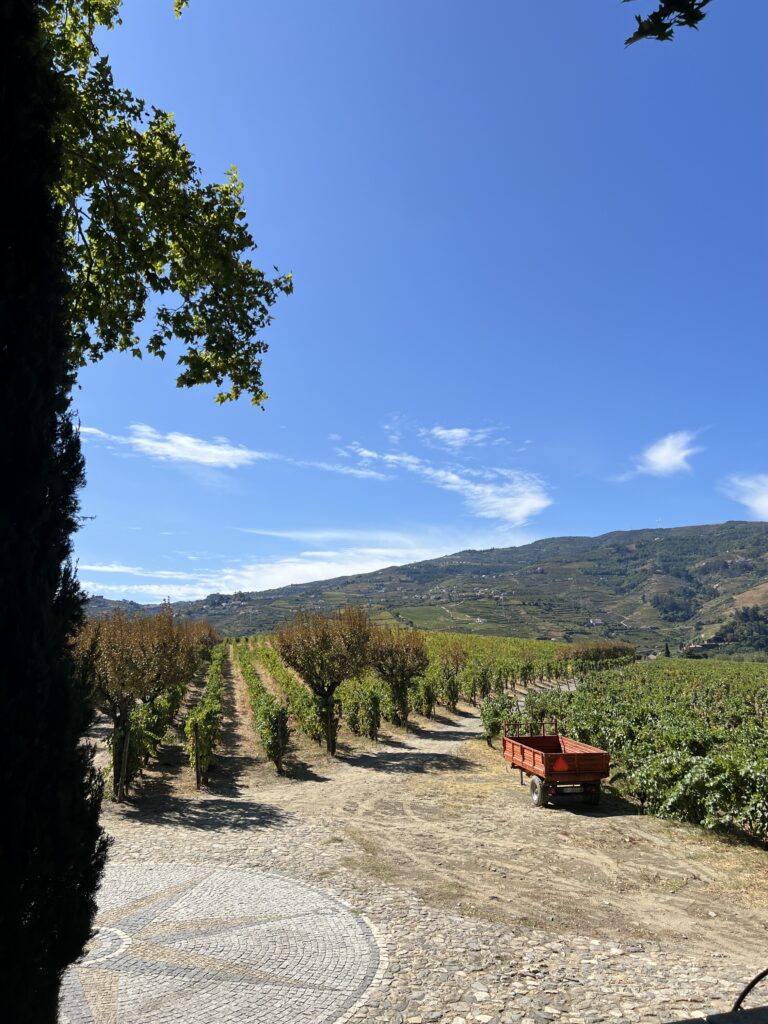
Just an hour outside of Porto lies the idyllic UNESCO World Heritage site of the Douro Valley. This picturesque landscape feels like something out of a postcard. With rolling hills of vineyards lining both sides of the Douro River, every turn in the road begs for a photo stop. We lucked out by snagging a harvesting experience while in Portugal, and even more so by getting to spend the night on the grounds in a wine barrel. Read about our dream stay in a wine barrel here.
We hopped into our rented Peugeot (never again—why did this car make a sound for every small maneuver? We were going insane. Silly French car!) and drove the scenic route along EN222 to Quinta da Pacheca.
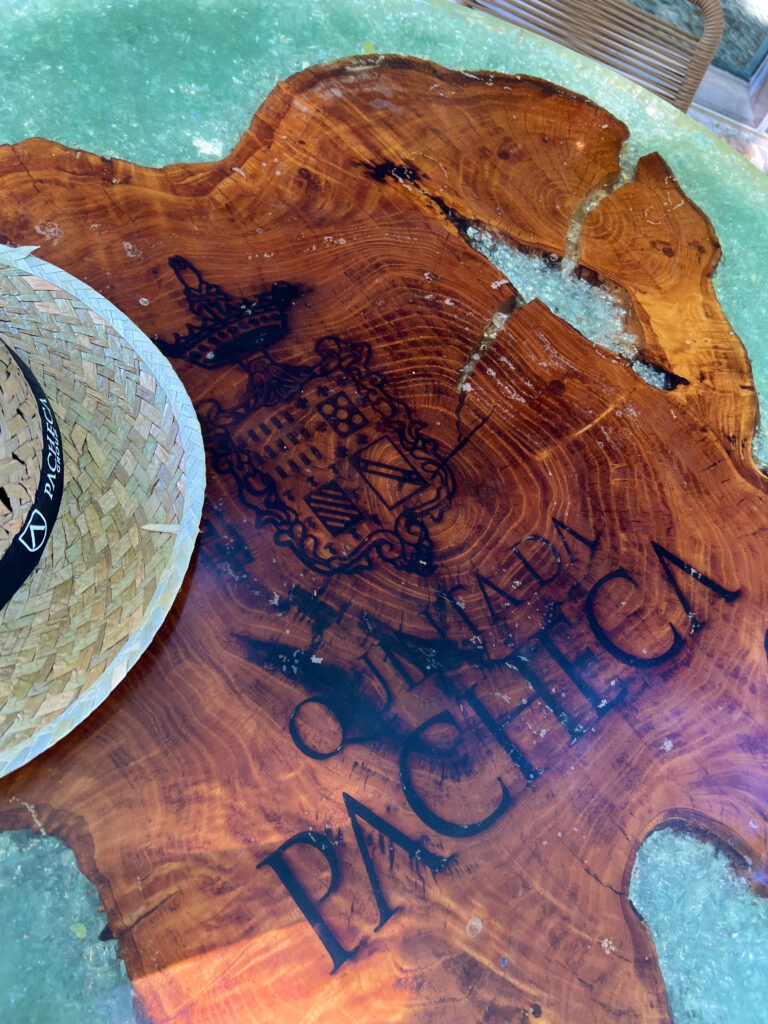
Quinta da Pacheca has an unconventional female-led history, one I wasn’t aware of until our tour. The estate is first mentioned in a document dating back to 1738, where it is referred to as “Pacheca.” “Pacheca” is the feminine form of the family name Pacheco, due to the estate being owned by Dona Mariana Pacheco Pereira, who oversaw the property.
A happy occurrence when you get to support a historic female legacy. Hell yeah—feminist wine!
Morning Agenda
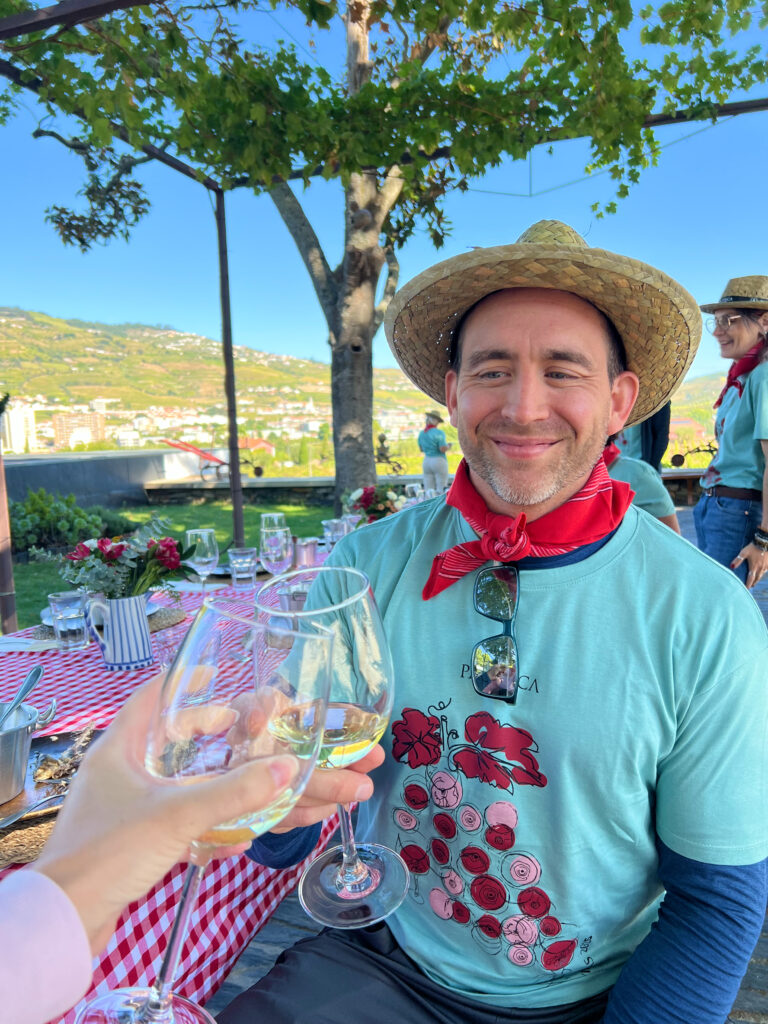
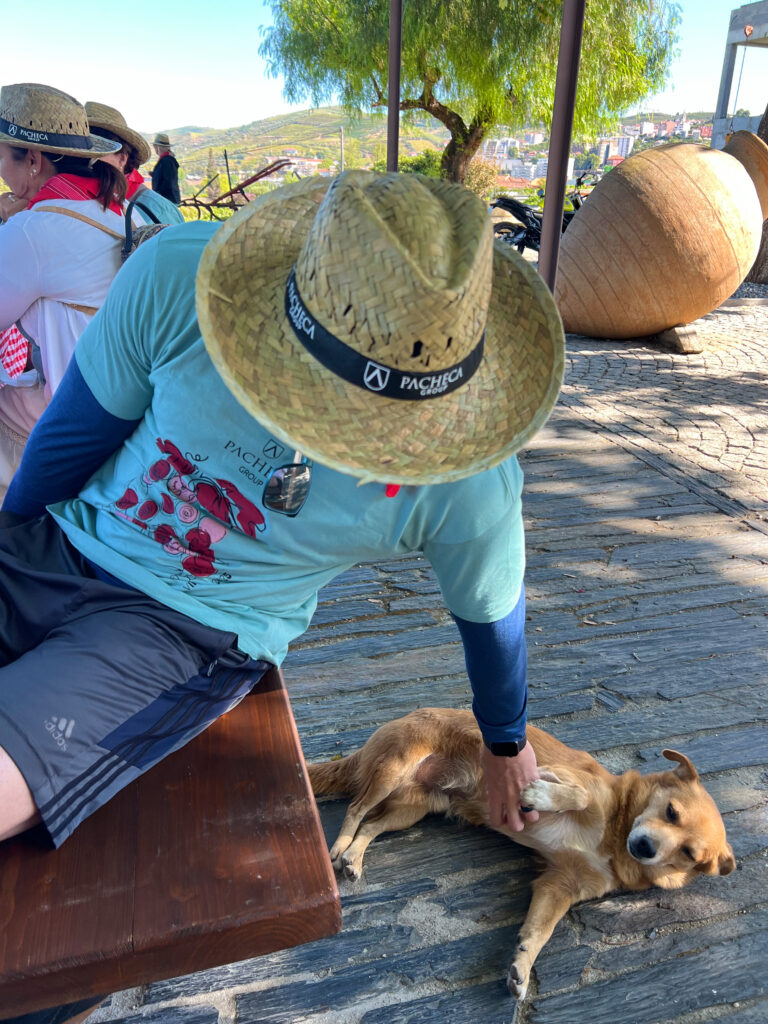
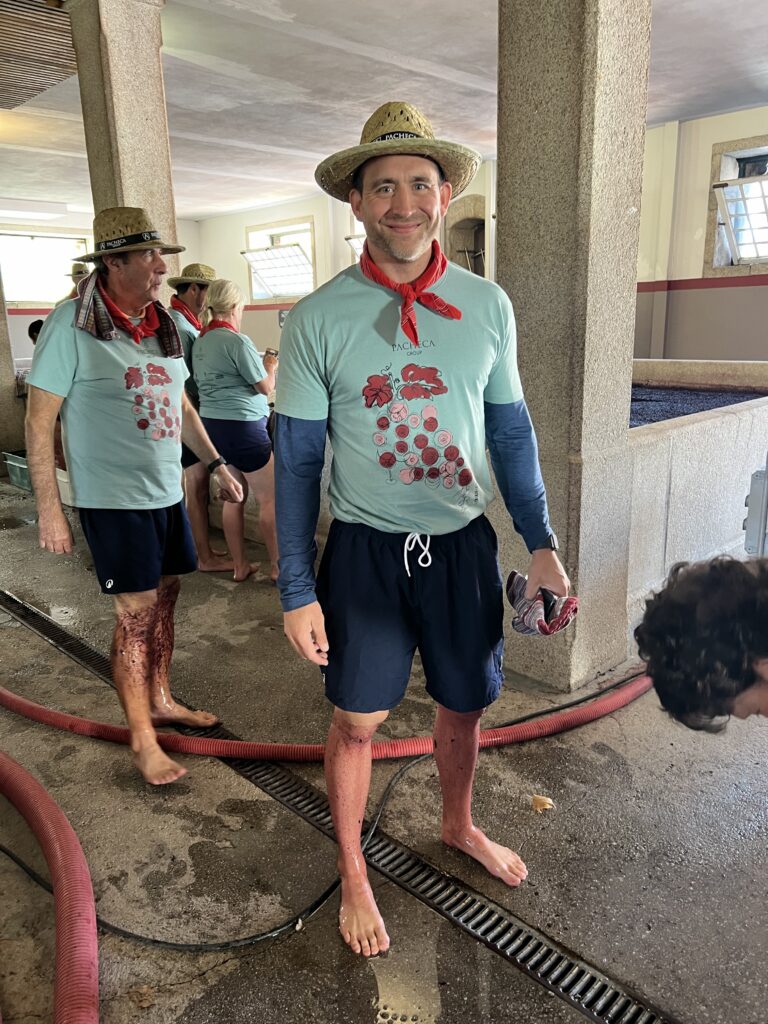
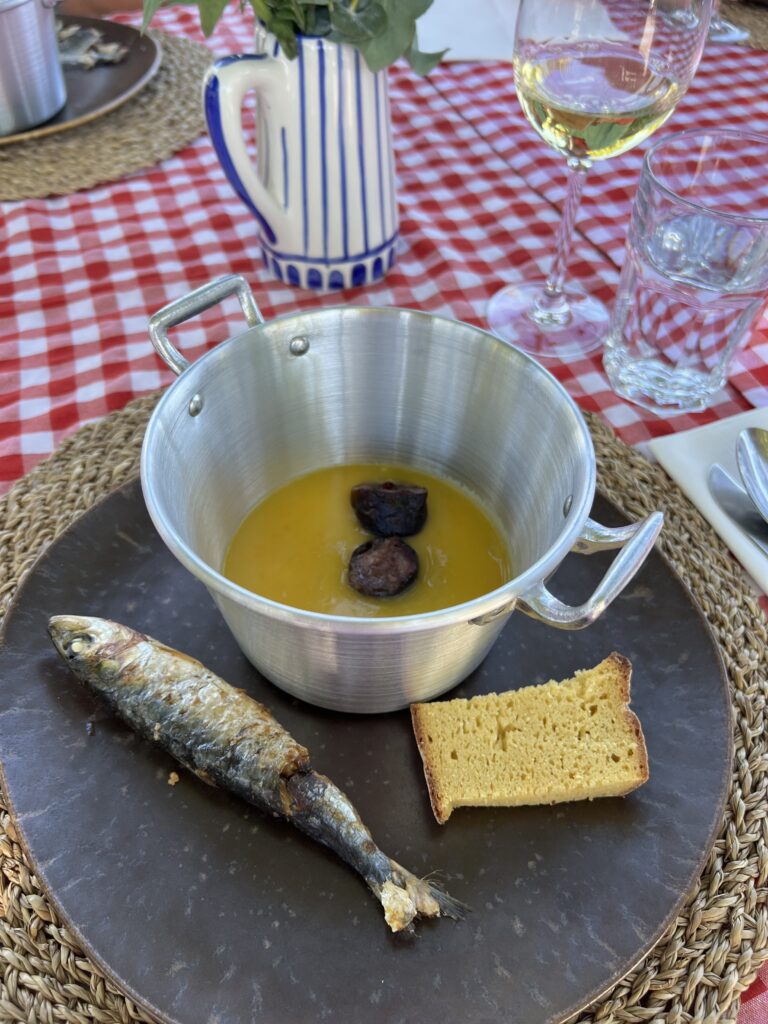
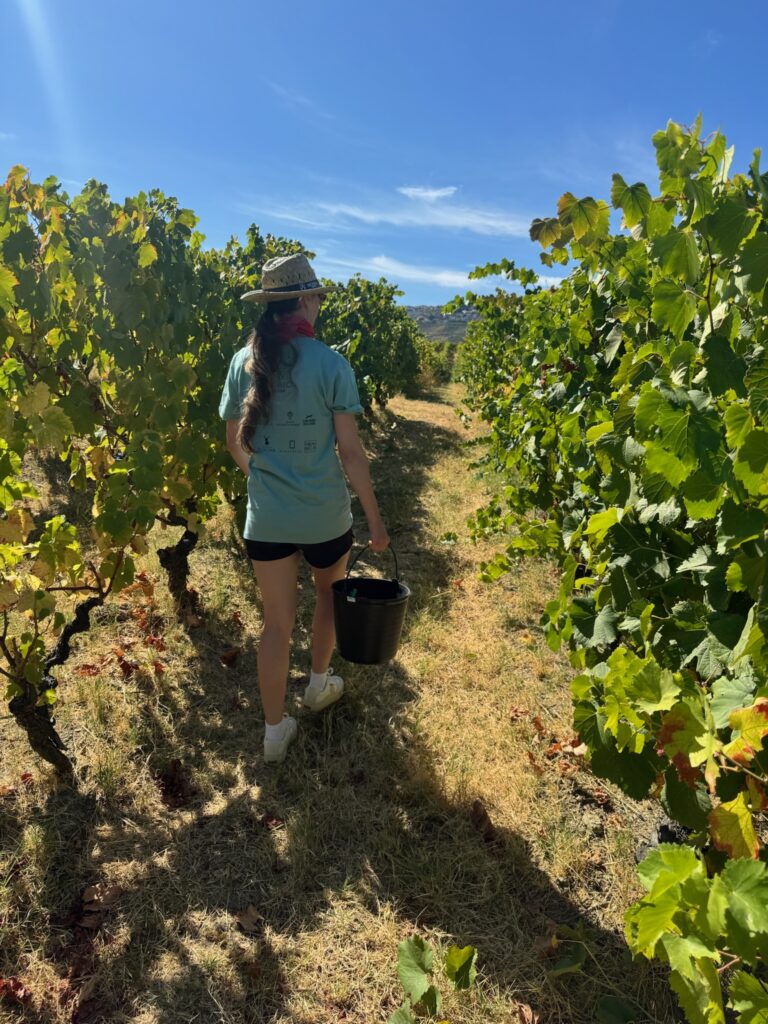
Upon arrival, we were given these darling turquoise matching t-shirts, hats, and neckerchiefs. Looking like little kids off on a field trip, we were then guided to our breakfast nook overlooking the neighboring vineyards. Our first hearty meal of the day consisted of onion soup with sausage, cornbread, and grilled sardines.
I personally have not perfected the art of separating the tiny rib bones from the meat of the fish, but there’s some elegance in that dinner table performance.
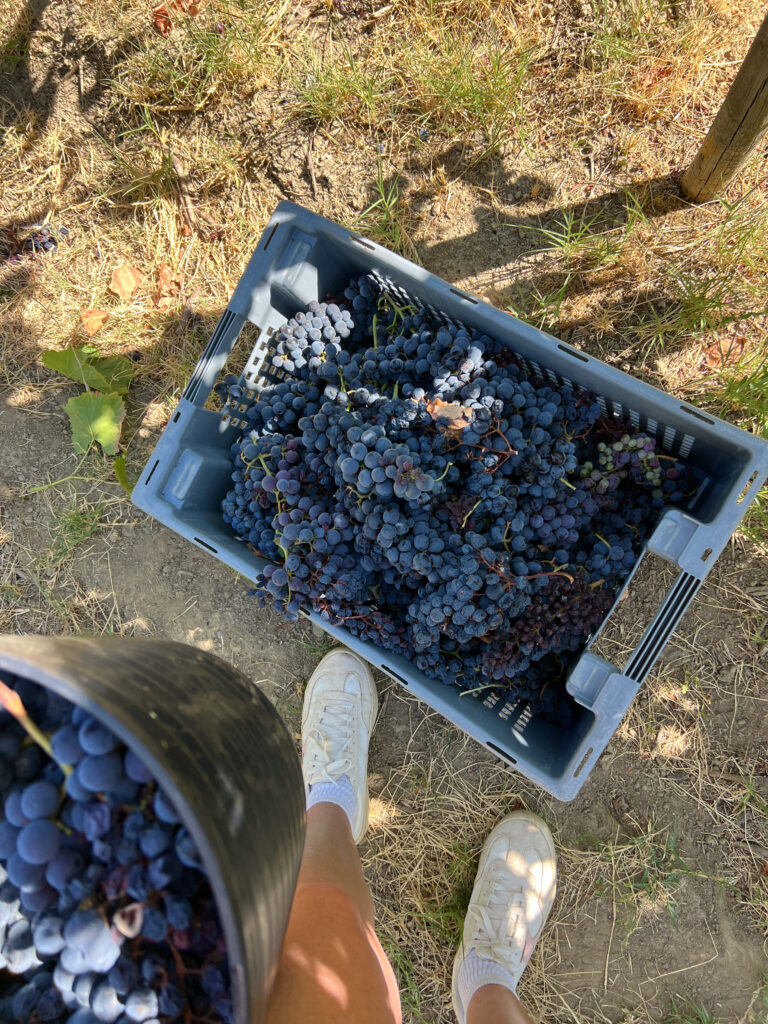
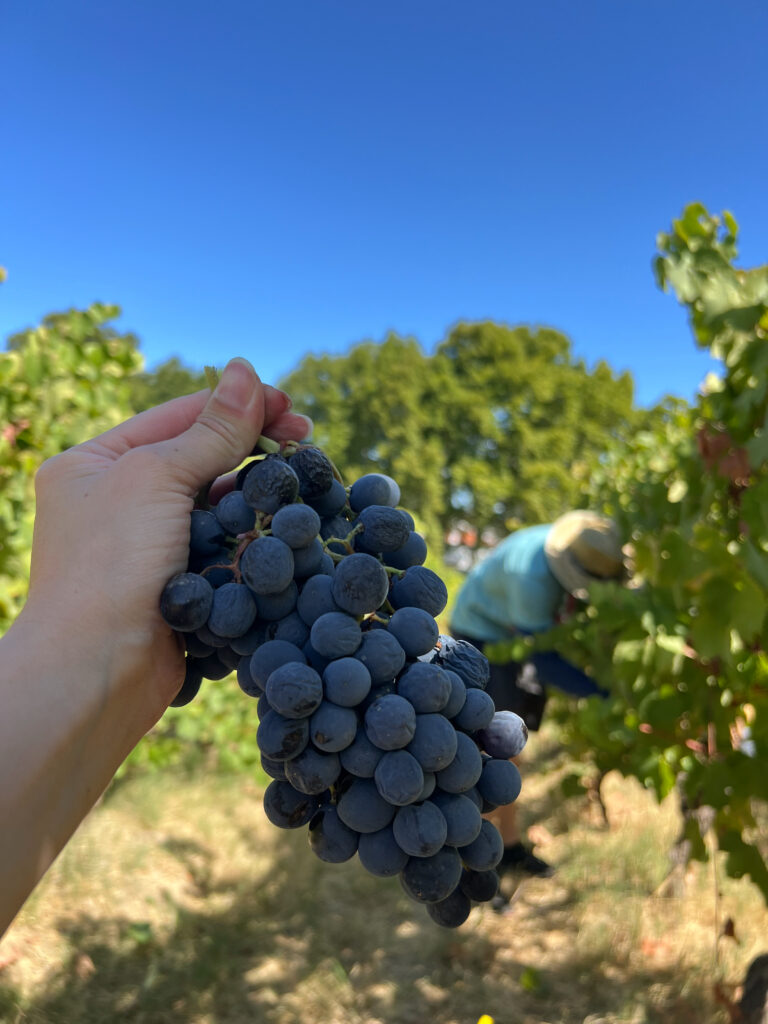
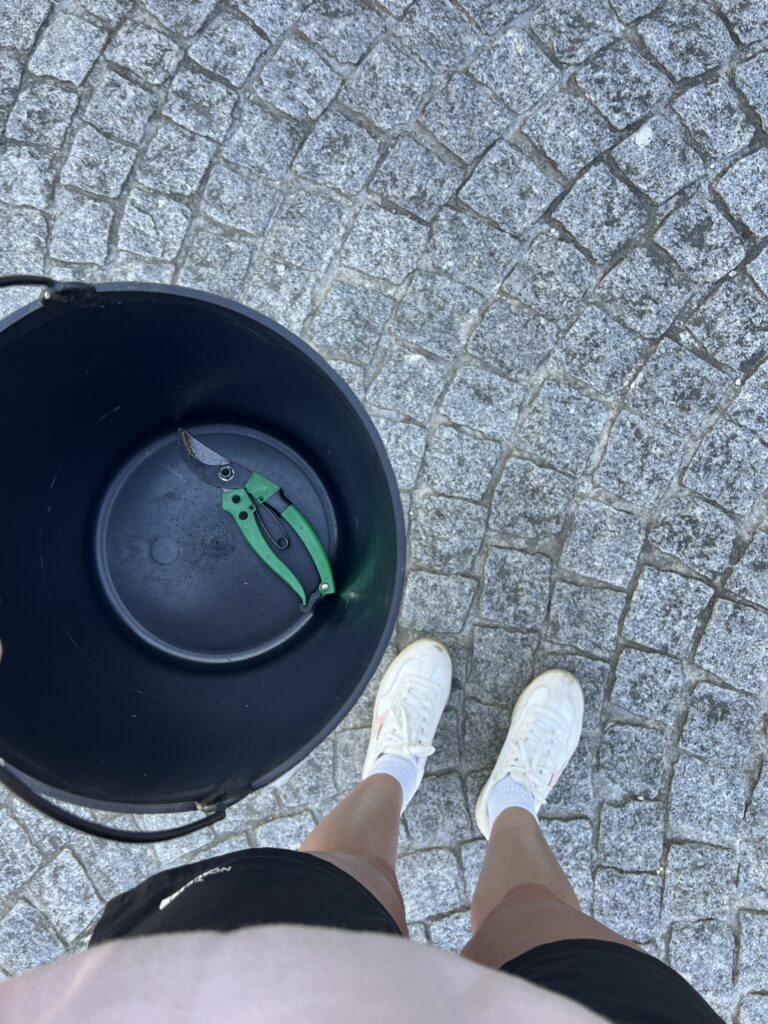
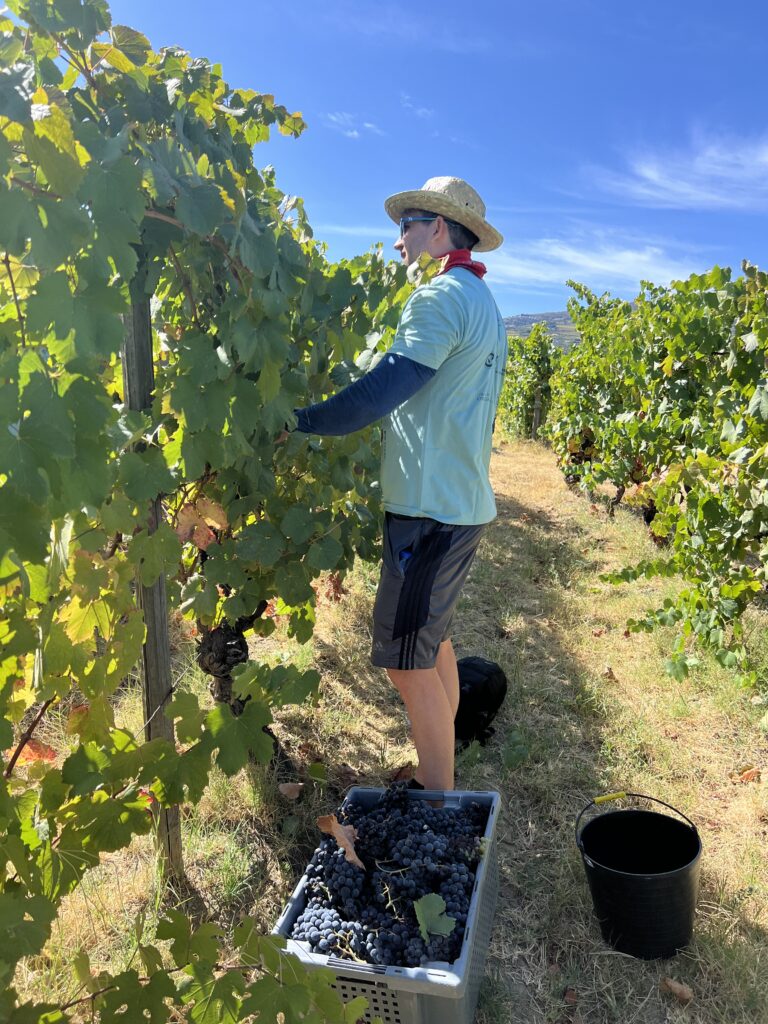
After a most picturesque breakfast, complete with a checkered-print tablecloth to keep on theme, it was time to get to work. We were given empty buckets and pruning scissors, then assigned a row of vines to thin out. Pictures don’t do this setting justice. The grounds were gorgeous that morning, as the sun softened the landscape. It had been a chilly drive up to Douro, and some manual labor took the bite out of the air.
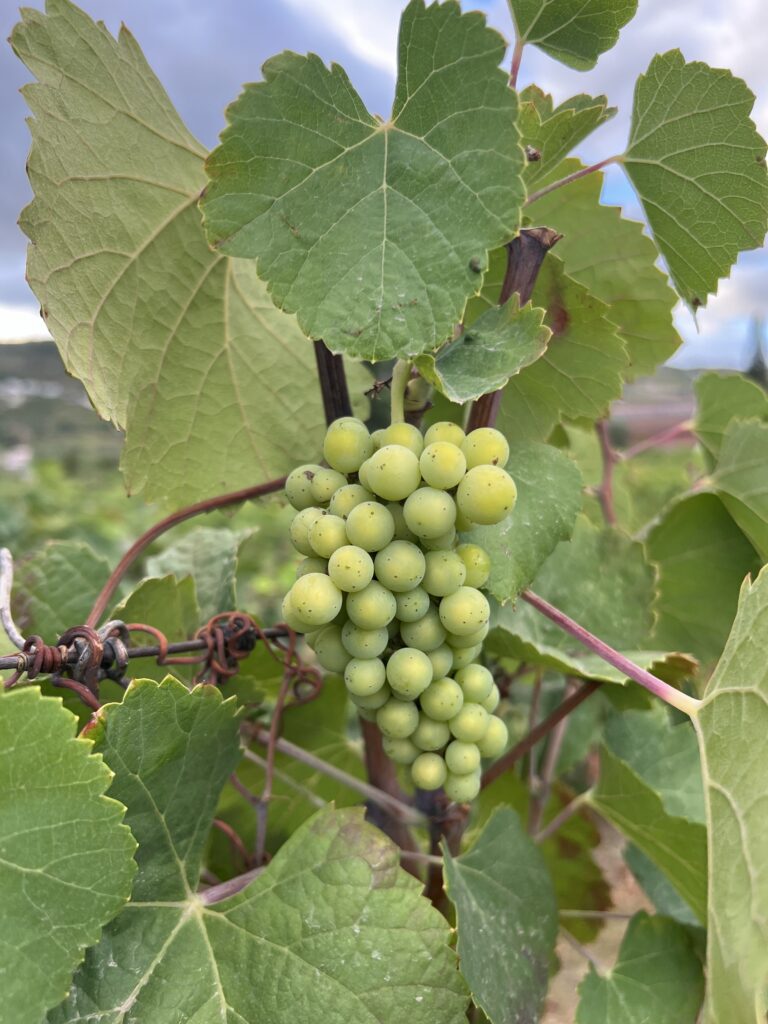
September in Douro is harvesting season. Hundreds of workers from all over Portugal, and even the world, flock to the valley to assist in the rich, labor-intensive experience of harvesting grapes. All to make Portugal’s number one export: port wine.
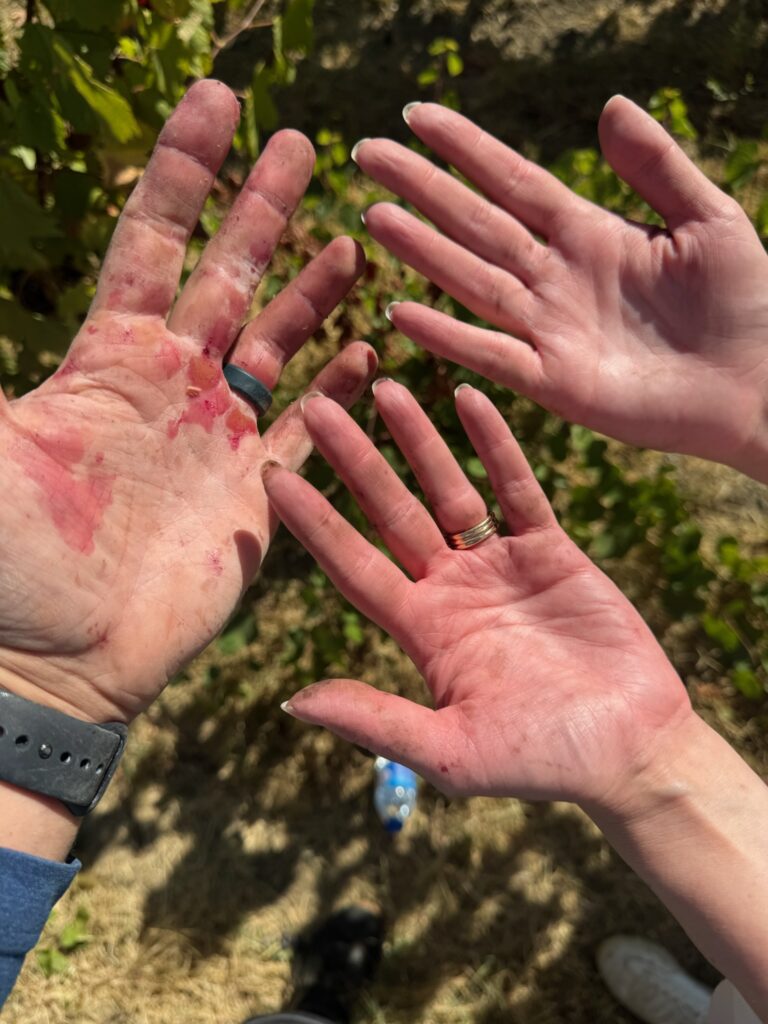
Then there are the tourists like us, happily meandering around the vineyard grounds in our matching t-shirts—truly on an adult field trip, with a purpose and clear instructions on proper harvesting protocol. I’m sure we didn’t put much of a dent in the actual work that needed to be completed this season, but it felt good to participate. A once-in-a-lifetime experience, to say the least—and one I would happily book again.
After our “backbreaking” hour of harvesting work (I say that facetiously), we were treated to a port tasting, of course. A lovely white port greeted us on the tasting patio as we sat and learned more about the aging process. In my previous experiences with port wine, I’ve never been a huge fan. What I had been served before was a thicker, darker dessert wine, mostly meant for after a meal here in the USA. However, while in Portugal, I found an affinity for white port, a less sweet sister to the ports I had tasted in the past, and a delightful surprise.
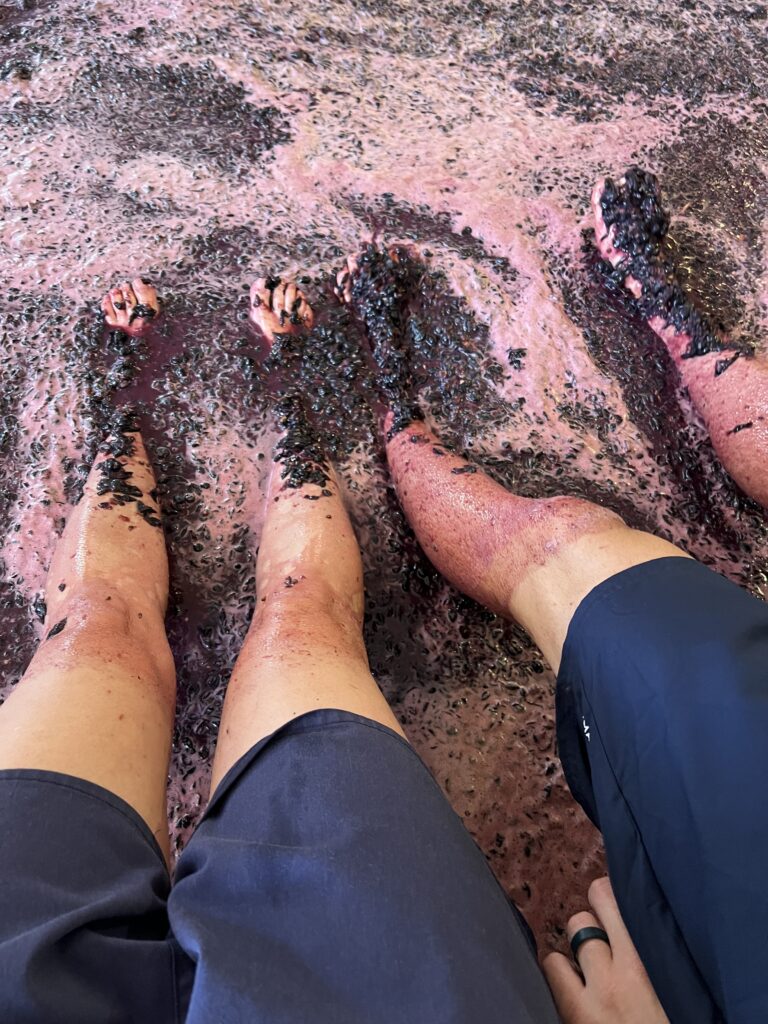
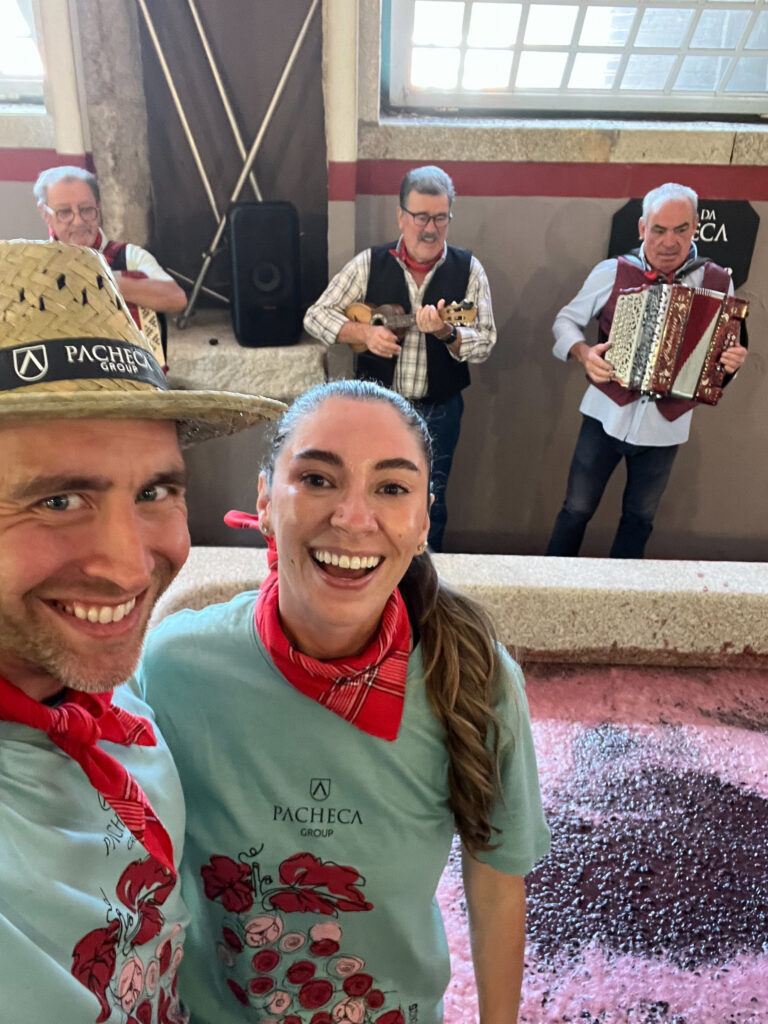
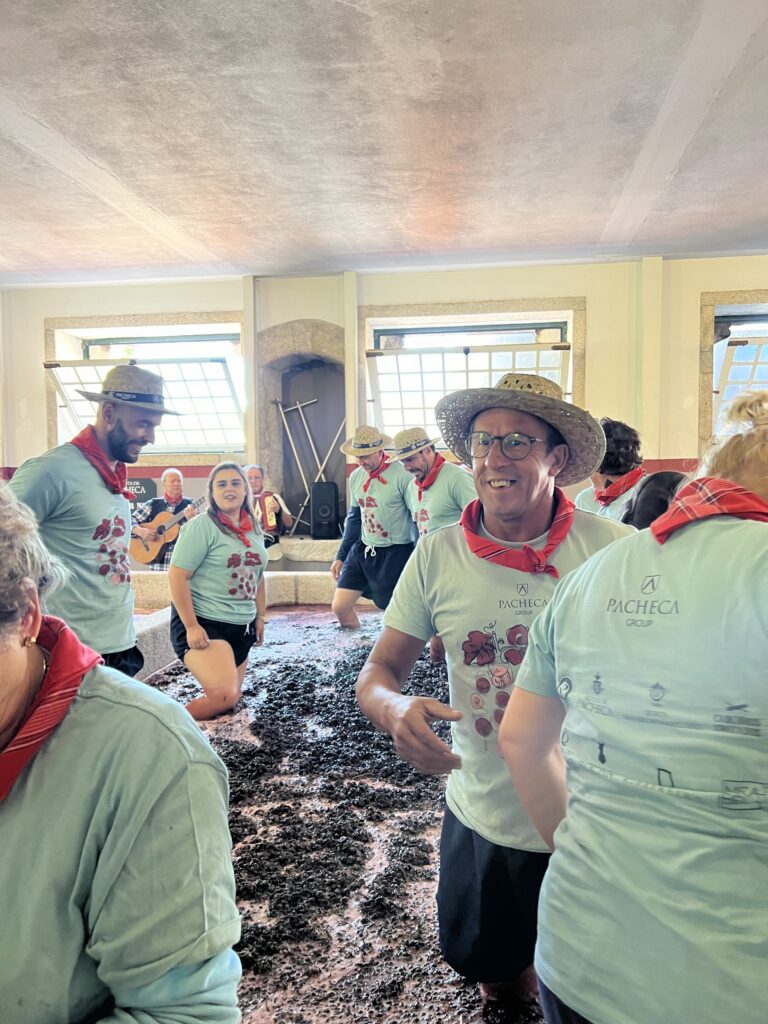
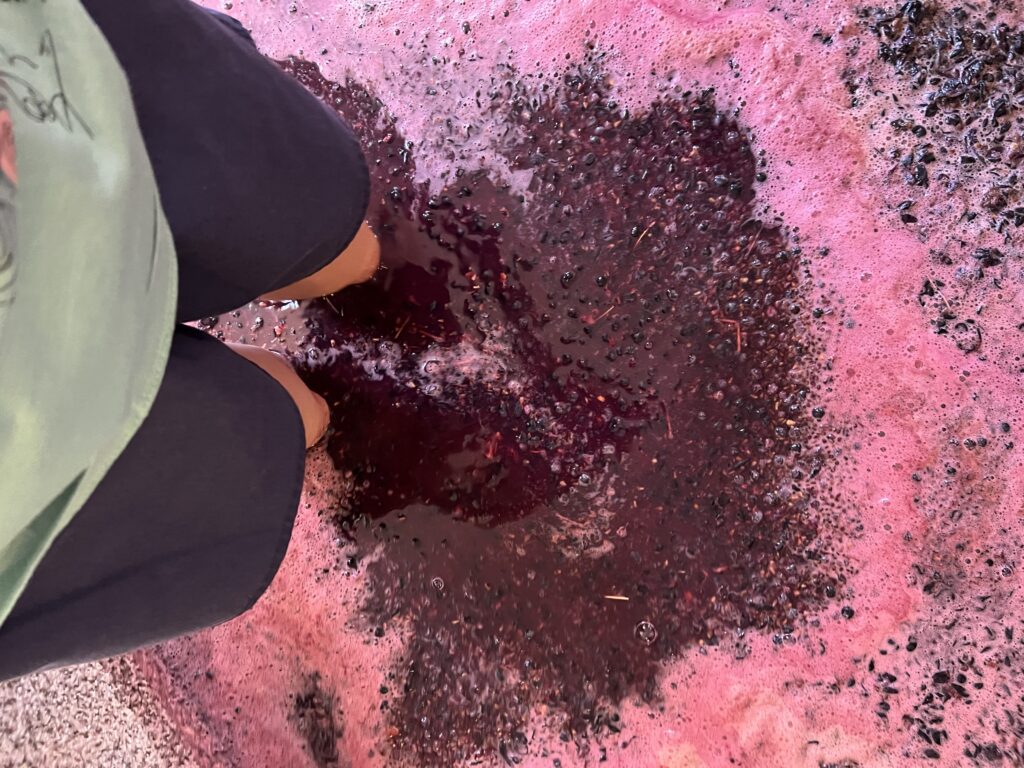
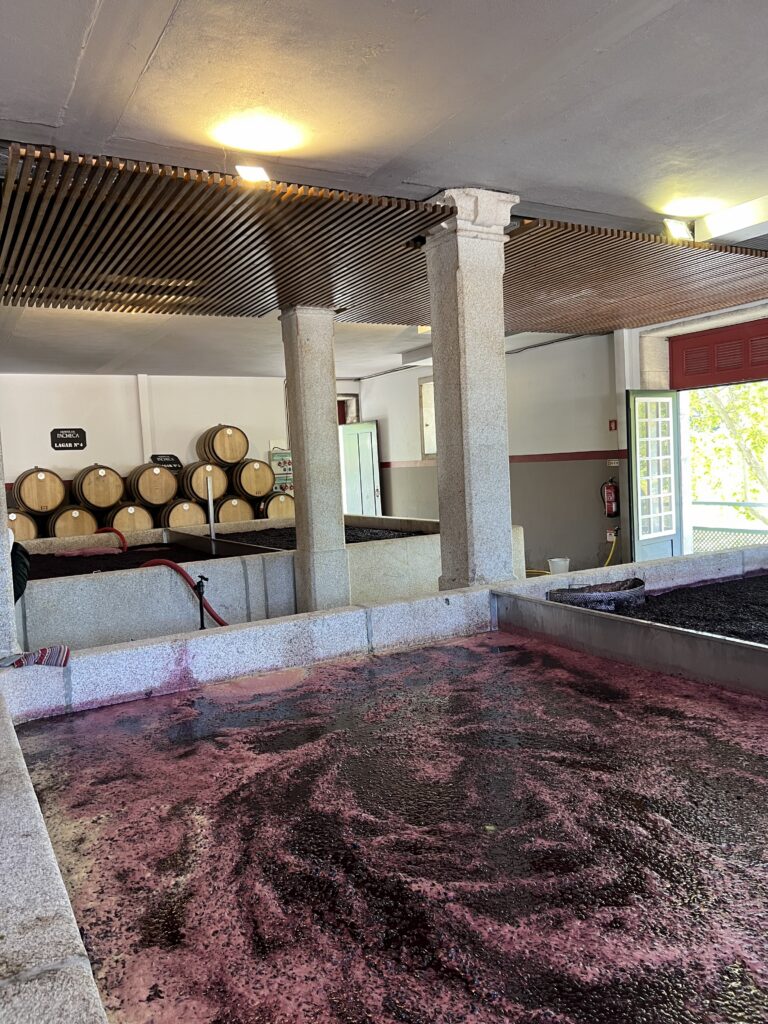
Then came the serendipitous communal event of literally stomping the grapes. We changed into our stomping shorts, rinsed our feet, and climbed into the lagares as a group. This method of gently crushing grapes with human feet helps extract the juice, color, and flavor from the skins without breaking the bitter seeds and stems. The lagare was surprisingly cold and warm at the same time, toward the middle, the grape mash was frigid, while the edges felt noticeably warmer.
Historically, grapes were harvested in the cool early mornings to prevent premature fermentation. Once refrigeration was introduced, harvesting could happen at any time of day, since the grapes could be chilled before crushing. When you step into a vat of freshly harvested, uncrushed grapes, the fruit and juice are often around 40°F. As you stomp, your body temperature naturally raises the temperature in the lagare, especially around the edges.
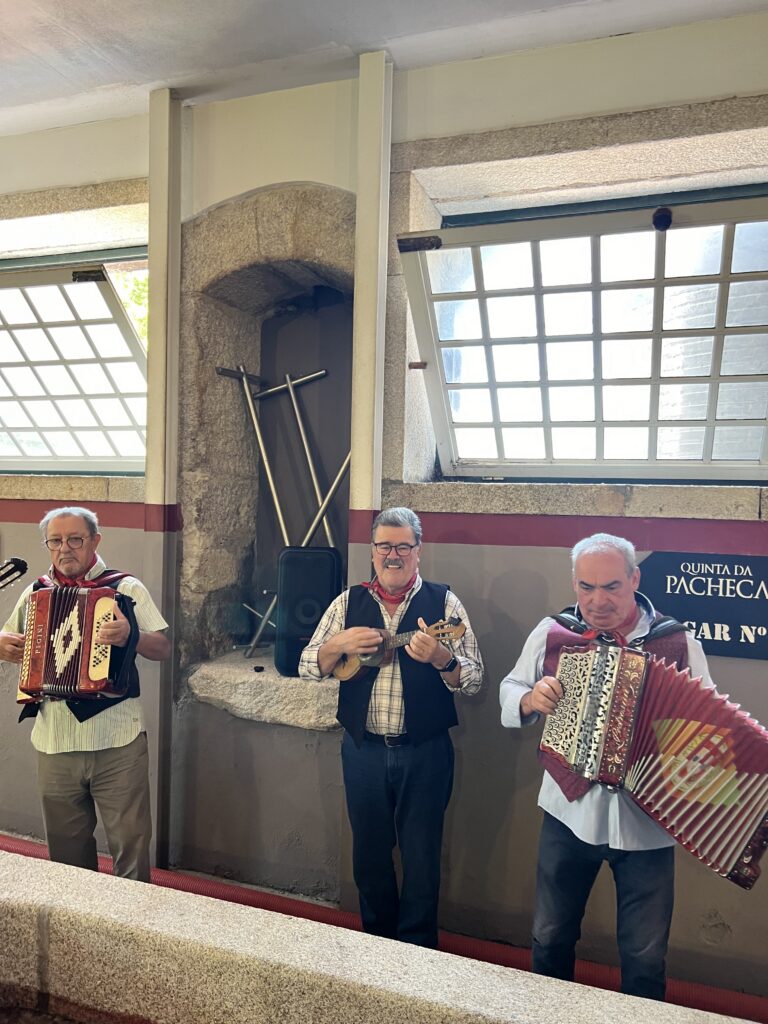
To keep the mood high (and our knees moving), a Portuguese folk band serenaded our stomping session. One of our guides doubled as the group hype man, leading us through songs, dances, can-can sessions, and even tango lines. Moving through the grape mash was surprisingly difficult, and after a few dances, the resistance of the liquid really caught up to you, hence the band keeping spirits high. The continual movement of the grape mash is actually critical to the fermentation process, which is why it requires constant motion… and, apparently, a hype man and live band.
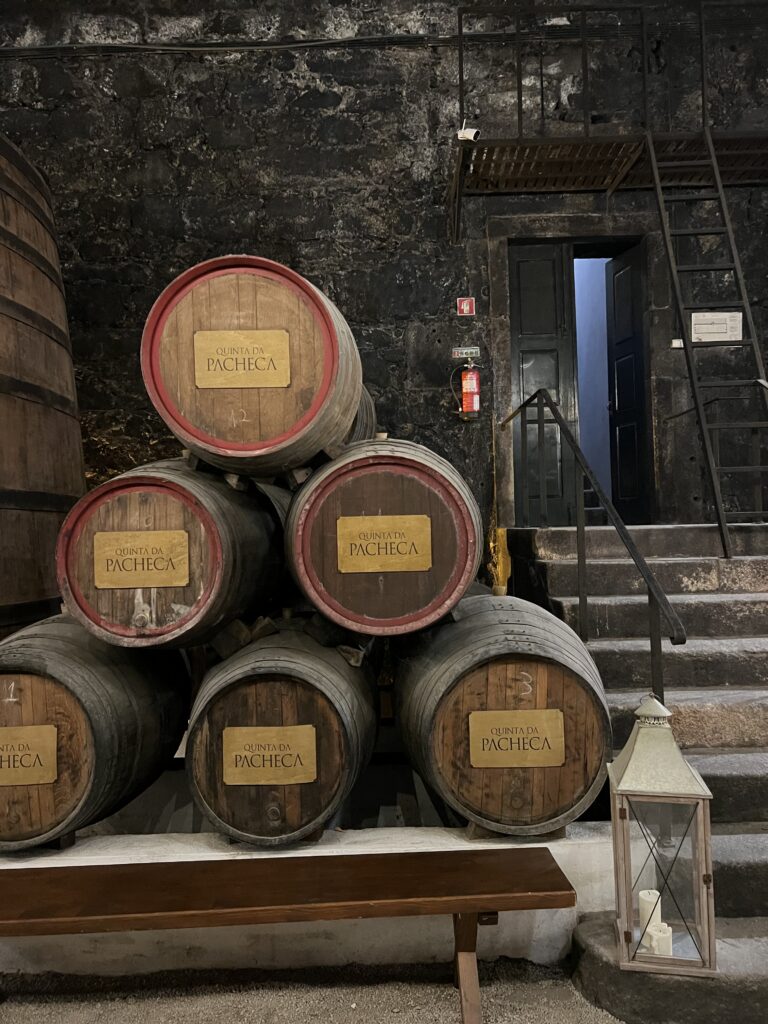
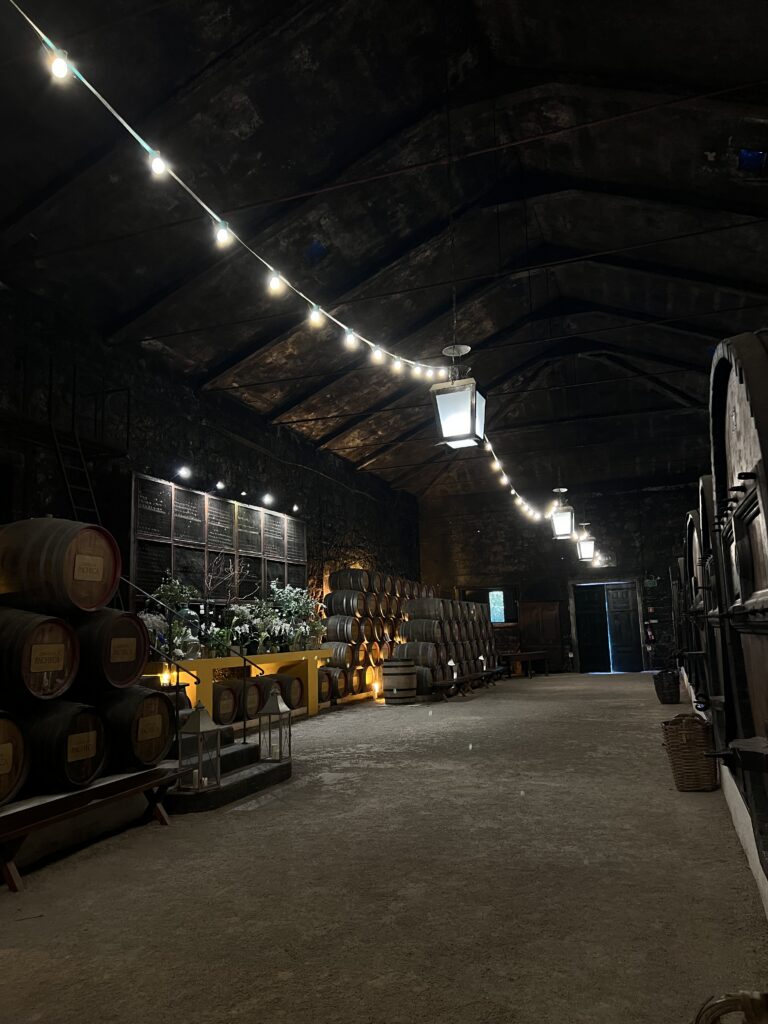
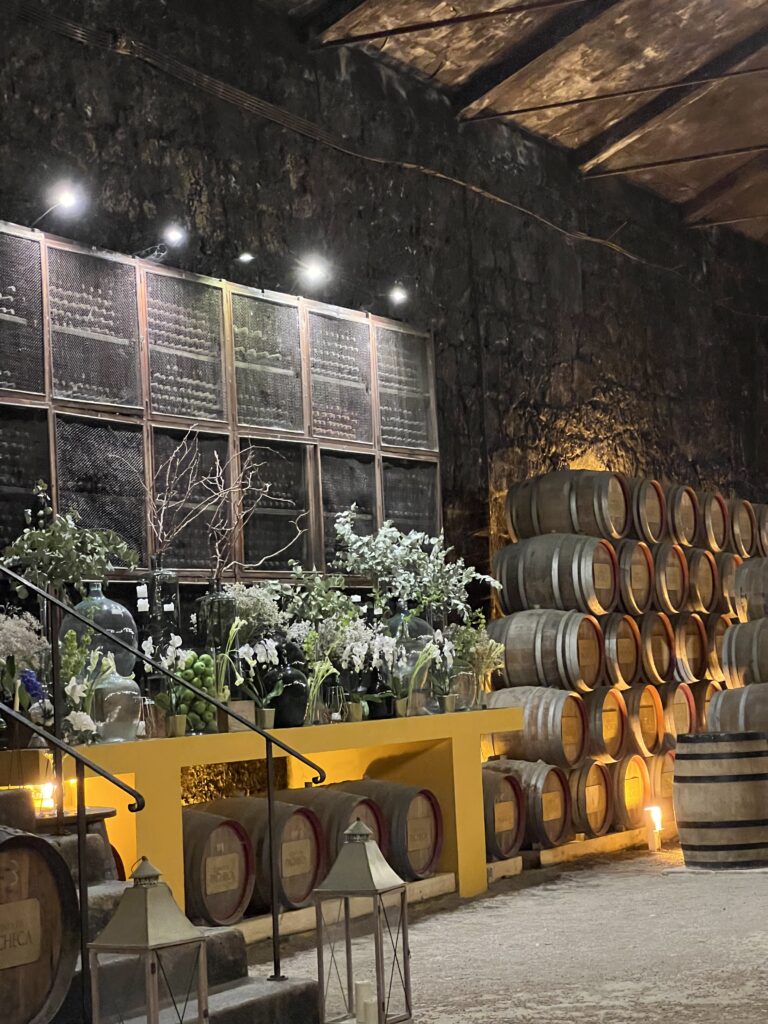
After a quick rinse and a change back into our normal clothes, we toured the barrel room, a mammoth, chilly space now reserved for tours. The vineyard has outgrown its original barrel room, and with modern wine technology, most storage now happens off-site. Still, it remains a key part of the vineyard’s history, and they routinely host dinners and events in the space.
Afternoon Festivities
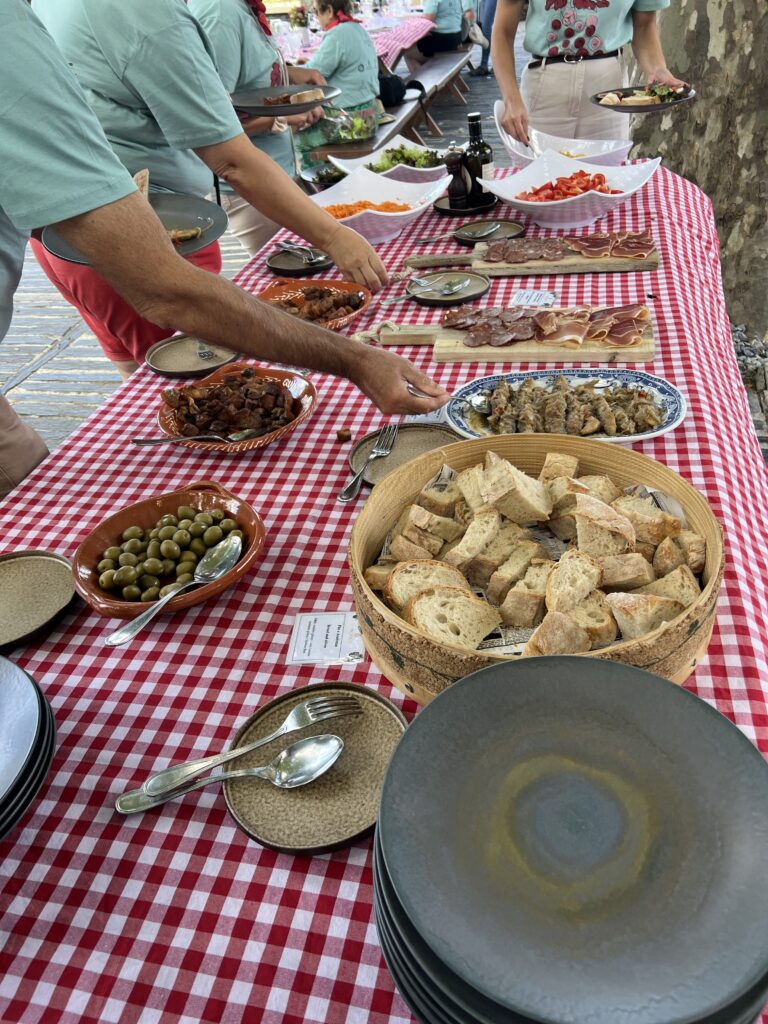
Finishing our tour of the estate, we made our way back to our picturesque patio for our final meal. A spread of hearty appetizers greeted us, cured meats, local cheeses, fresh breads, olives, and vibrant salads, all thoughtfully paired with Portuguese wine.
Then came the second course: sautéed veal loin with creamy mashed potatoes, a dish I will think fondly of for quite some time.
The wine was flowing, the soft afternoon sun wrapped the patio in a warm glow, and conversations drifted easily from one topic to the next. Glasses were never empty for long, and there was no rush to be anywhere else. We soaked in the surrounding vineyard views and reflecting on a day that already felt like a highlight of the trip.
Eventually, as the sun began its slow descent, we said our goodbyes and made our way to the concierge to check into our wine barrel for the night, equal parts curious, excited, and still riding the glow of a very full, very memorable day.

COMMENTS